If you’ve ever wondered how Moroccan cooks manage to make chicken taste like it’s been kissed by cinnamon, honey, and citrus all at once — without tasting like dessert — the answer lies in one dish: chicken tagine. It’s the perfect entry point into North African cooking, because it teaches you the core skill of Moroccan cuisine in a single pot: balancing sweet and savory.
This guide walks you through everything a beginner needs — the history, the spice logic, the technique, and a full recipe you can make tonight, even without a traditional clay tagine.
Table of Contents
What Is a Tagine, Really?
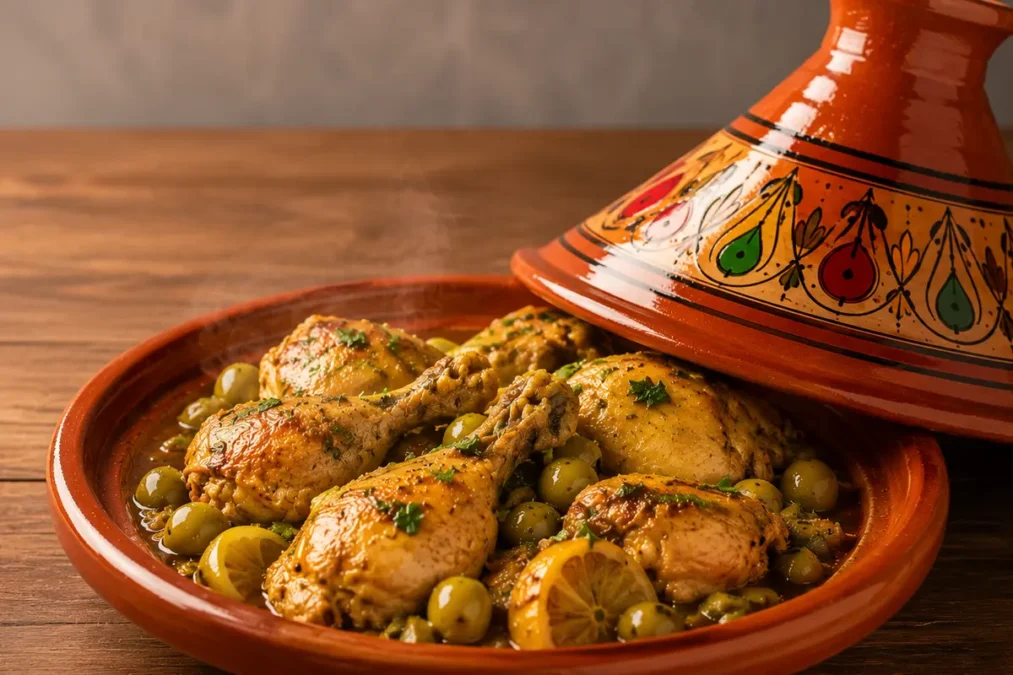
The word “tagine” refers to two things: the conical clay or ceramic pot used for slow-cooking, and the stew cooked inside it. The pot’s design — a wide shallow base topped with a tall, cone-shaped lid — traps steam and channels condensation back down onto the food, so meat simmers gently in its own juices for hours without drying out.
Tagine cooking developed across Morocco, Algeria, and Tunisia, shaped by Berber culinary traditions and later enriched by Arab, Andalusian, and trans-Saharan trade influences. Spices like cinnamon, ginger, and saffron arrived via the historic spice trade routes that connected Morocco to the wider spice world, while dried fruits and nuts reflect the Andalusian influence on Moroccan cooking. That layered history is exactly why a good tagine tastes complex even though the technique itself is simple.
You don’t need an authentic clay tagine to make this recipe. A Dutch oven or any heavy pot with a tight-fitting lid will do the job. The clay pot changes texture slightly, but the flavor logic is identical.
The Secret to Moroccan Sweet-and-Savory Balance
This is the part most beginners get wrong: they either dump in too much cinnamon and it tastes like a spiced dessert, or they skip the sweetness entirely, and it tastes flat. Moroccan spicing works because it layers three things:
- Warm spices — cinnamon, ginger, turmeric, and cumin build a savory, earthy base
- Sweetness — honey, dried apricots, or prunes round out the sharp edges of the spices
- Acidity — preserved lemon or fresh lemon juice cuts through the richness and keeps the dish from tasting heavy
The trick is proportion, not quantity. A well-balanced tagine should taste savory first, with sweetness appearing as an aftertaste rather than an upfront flavor. Think of the honey and fruit as a supporting note, not the melody.
Ingredients You’ll Need
For the chicken and spice base:
- 4 bone-in, skin-on chicken thighs (or a mix of thighs and drumsticks)
- 2 tbsp olive oil
- 1 large onion, thinly sliced
- 3 garlic cloves, minced
- 1 tsp ground ginger
- 1 tsp ground cumin
- 1 tsp turmeric
- 1/2 tsp ground cinnamon
- 1/4 tsp cayenne or Aleppo pepper (optional, for gentle heat)
- Pinch of saffron threads (optional, but traditional)
- Salt and black pepper to taste
For the sweet-and-savory finish:
- 1 cup chicken stock
- 1/2 cup dried apricots or pitted prunes
- 2 tbsp honey
- 1 preserved lemon, quartered (or juice of 1 fresh lemon)
- 1/3 cup green olives
- 1/4 cup blanched almonds, toasted
- Fresh cilantro or parsley, chopped, for serving
Step-by-Step Recipe
1. Season and sear the chicken. Pat the chicken dry and season generously with salt, pepper, cumin, and half the ginger. Heat olive oil in a Dutch oven over medium-high heat and sear the chicken skin-side down until golden, about 5 minutes per side. Remove and set aside — you’re not cooking it through yet, just building flavor.
2. Build the spice base. In the same pot, lower the heat to medium and add the onions. Cook until soft and translucent, about 5–6 minutes. Add garlic, remaining ginger, turmeric, cinnamon, cayenne, and saffron. Stir constantly for about 30 seconds until fragrant — this “blooming” step is what unlocks the spices’ full flavor, so don’t skip it.
3. Simmer. Return the chicken to the pot, nestling it into the onions. Pour in the chicken stock, cover, and simmer on low heat for 35–40 minutes, until the chicken is tender and nearly falling off the bone.
4. Add the sweet-and-savory elements. Stir in the dried apricots, honey, and preserved lemon. Cover and simmer for another 10 minutes so the fruit softens and the flavors meld.
5. Finish and serve. Add the olives in the last 5 minutes of cooking — any longer, and they turn bitter. Taste and adjust: more honey if it needs sweetness, more lemon if it needs brightness. Scatter toasted almonds and fresh cilantro on top just before serving.
Serve over couscous or with warm crusty bread to soak up the sauce.
Common Mistakes Beginners Make
- Adding cinnamon too heavily. A little goes a long way — start with 1/2 teaspoon and adjust next time.
- Skipping the spice bloom. Adding raw spices directly to liquid mutes their flavor. Always cook them briefly in oil first.
- Adding olives too early. They turn bitter with prolonged cooking, so add them near the end.
- Using boneless chicken. Bone-in thighs hold up better to slow simmering and produce a richer sauce.
- Forgetting the acid. Without lemon or preserved lemon, the dish can taste one-note and overly sweet.
FAQ
Can I make chicken tagine without a tagine pot? Yes. A Dutch oven or any heavy, lidded pot works well. The key is a tight seal that traps steam.
What’s the difference between preserved lemon and fresh lemon? Preserved lemon is salt-cured and has a deeper, almost fermented citrus flavor that’s traditional in Moroccan cooking. Fresh lemon juice is a fine substitute if you don’t have it on hand, though the flavor will be brighter and less complex.
Is chicken tagine spicy? Not typically. It’s warmly spiced rather than hot. The cayenne or Aleppo pepper is optional and can be left out entirely for a milder dish.
Can I make this in a slow cooker? Yes — sear the chicken and sauté the aromatics on the stovetop first, then transfer everything to a slow cooker and cook on low for 4–5 hours.
What should I serve with chicken tagine? Couscous is the classic pairing, but crusty bread, rice, or a simple cucumber-tomato salad all work well alongside it.
Looking for more ways to explore global spicing? Check out our guide to Japanese Oyakodon or dive into Italian Cuisine, another slow-simmered, deeply spiced stew with its own distinct personality.